


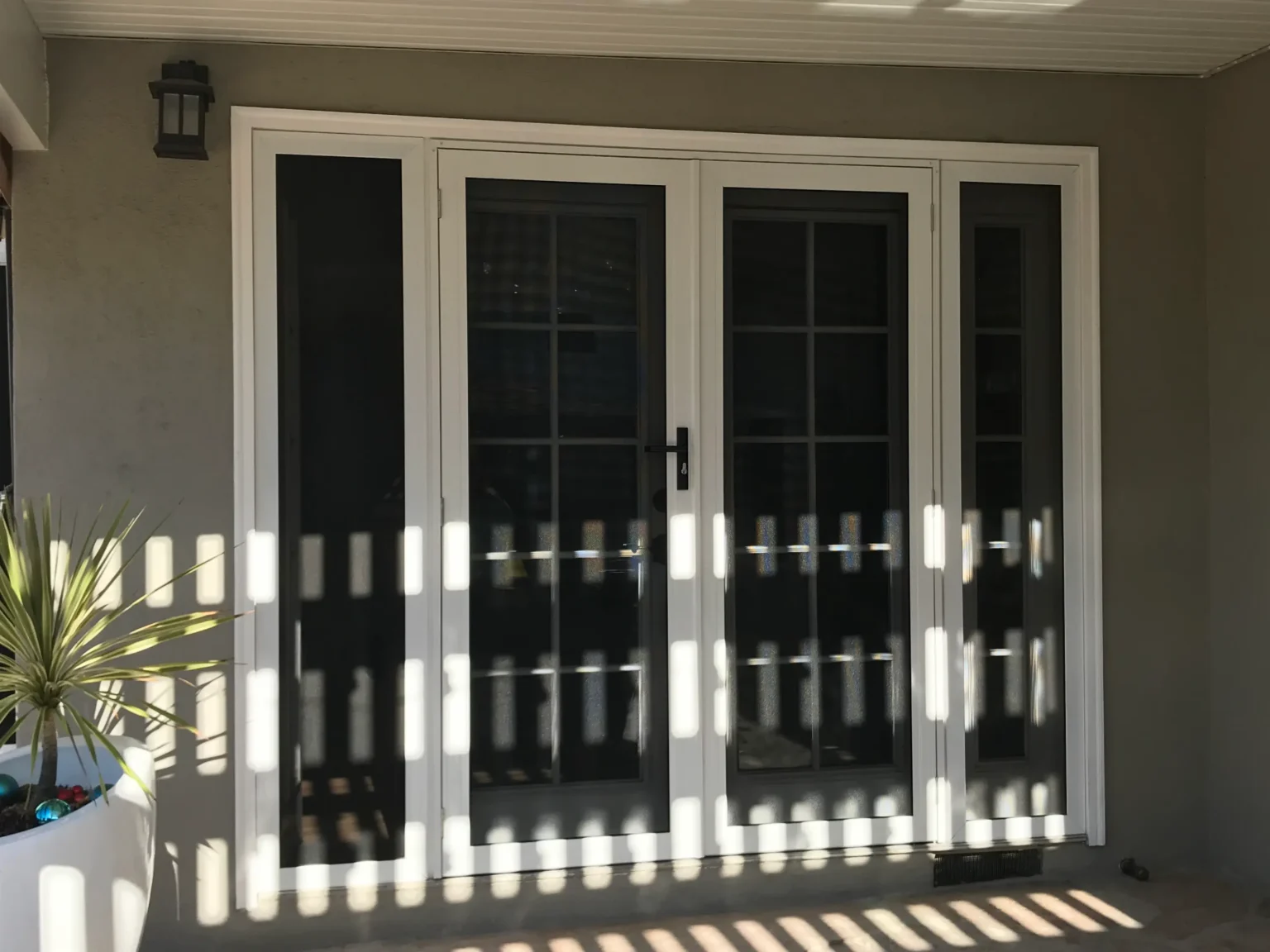
In the realm of modern residential architecture, the entryway has evolved far beyond its traditional role as a simple point of passage. Today, it serves as the critical interface between the sanctuary of the home and the unpredictability of the outside world. As homeowners become increasingly sophisticated in their approach to safety, the demand for high-performance physical security has led to a technological revolution. We are no longer limited to the choice between a flimsy insect screen and a heavy, opaque wooden door. Instead, we have entered an era of “transparent armor”, systems that provide the structural integrity of a vault while maintaining the visual clarity and airflow of a traditional porch.
Achieving this balance requires a deep understanding of material science and mechanical engineering. It is about creating a defensive envelope that does not compromise the quality of life. For the discerning homeowner, property manager, or architect, the decision to install a secondary security barrier is an investment in long-term peace of mind. To truly appreciate the complexity of these systems, one must look past the aesthetic finish and examine the structural specifications that define a world-class security door.
The Metallurgy of Stainless Steel Mesh
The primary component of any high-tier security barrier is the mesh. Unlike standard screens composed of fiberglass or thin aluminum, professional-grade security doors utilize high-tensile, marine-grade stainless steel. The choice of 304 or 316-grade stainless steel is not arbitrary; these alloys are specifically engineered for their extreme resistance to both physical impact and environmental corrosion. In coastal regions or areas with high humidity, this resistance is what prevents a security door from becoming a liability over time.
The mesh is woven with a precision that balances wire diameter with open-air percentage. This ensures that while the screen is dense enough to pass rigorous “knife shear” tests, where a heavy blade is used in an attempt to slice the material, it remains porous enough to allow 180-degree visibility and maximum ventilation. This duality is the hallmark of advanced engineering. It allows a homeowner to see a visitor clearly from the safety of the interior, while the visitor sees only a dark, impenetrable surface.
Frame Integrity and the Science of Clamping
A common misconception in the security industry is that the strength of a door lies solely in the mesh. In reality, a screen is only as strong as its attachment to the frame. In inferior products, the mesh is often held in place by a simple rubber spline, which can be easily kicked out or pulled away. Professional-grade systems employ a proprietary mechanical clamping or chemical bonding process. This integrates the mesh and the frame into a singular, rigid structural unit.
The frames themselves are typically constructed from architectural-grade aluminum extrusions. These are significantly thicker than standard screen frames and are designed to resist prying and torsion. When an intruder attempts to use a crowbar or a heavy tool to leverage the door, the frame’s internal ribbing and reinforced corners distribute the force across the entire door jamb, preventing a localized breach. For those who require deep-dive data on wind load ratings, impact resistance, and material thickness, the option to Download Our Technical Brochures provides a comprehensive look at the testing protocols that these frames must survive.
Multi-Point Locking and Tamper-Proof Hardware
The locking mechanism is the brain of the security system. A standard deadbolt provides a single point of failure; if the wood around the strike plate is compromised, the door opens. High-performance security doors utilize multi-point locking systems that engage the frame at three or even five different locations simultaneously. These locks are often “hook-style,” meaning they do not just slide into the frame but hook into it, making it nearly impossible for the door to be pulled away from the jamb.
Furthermore, the hardware is designed to be tamper-proof. Hinges are fitted with non-removable pins or are fully recessed within the frame to prevent an intruder from simply lifting the door off its tracks. This holistic approach ensures that every potential “bypass” technique is addressed during the manufacturing phase. By hardening the hinges, the locks, and the frame mounting, the entryway becomes a “hard target” that most opportunistic criminals will bypass in favor of a simpler, less protected home.
The Physiological and Environmental Benefits of Open Air
Beyond the physical protection from intruders, security screen doors offer a significant improvement to the internal environment of a house. Most modern homes suffer from “stale air syndrome,” where pollutants and CO2 levels rise because the house is kept tightly sealed for security reasons. A reinforced screen allows for constant, 24-hour cross-ventilation. This natural airflow flushes out indoor toxins, reduces the presence of allergens, and regulates humidity levels.
From an energy perspective, the ability to leave a front or back door open safely can lead to a substantial reduction in cooling costs. Passive cooling, driven by natural breezes, allows the HVAC system to rest during the evening hours. This is especially beneficial in climates where the temperature drops significantly at night. Because the mesh is also designed to block up to 60% of UV rays, it helps protect interior flooring and furniture from sun damage while still allowing natural light to fill the foyer.
Aesthetic Customization and Curb Appeal
Historically, home security was seen as an eyesore, something that detracted from the beauty of a home. Modern security doors have shattered this stereotype. Because the stainless steel mesh is finished in a specialized matte-black powder coat, it absorbs light rather than reflecting it. This makes the mesh virtually transparent from the street, allowing the home’s original door and architectural details to remain the center of attention.
Frames can be powder-coated in hundreds of different colors or even finished with wood-grain textures that mimic the appearance of oak, cedar, or mahogany. This allows the security system to blend seamlessly into the existing design language of the house. Whether the property is a sleek, glass-heavy modern build or a traditional historic residence, the security feature can be customized to look like an original part of the architectural plan rather than an afterthought.
Longevity and the Return on Investment
A home improvement project is only as valuable as its lifespan. Cheap screen doors often sag, rust, or fail within three to five years, requiring frequent replacement and repair. A high-specification security door is a “one-time” investment. The combination of marine-grade stainless steel and baked-on powder coating ensures that the door remains functional and attractive for decades with minimal maintenance.
In the real estate market, these doors are increasingly viewed as a premium feature. Prospective buyers recognize the value of a home that is already equipped with high-end safety measures and energy-efficient ventilation. By choosing a system that is built to industrial standards, homeowners are not just buying a door; they are increasing the equity and safety profile of their most important asset.
Final Thoughts on Perimeter Strategy
The safety of a family should never be a matter of compromise. By integrating the best in material science with the latest in locking technology, it is possible to create a home that is both open to the beauty of the world and closed to its dangers. A high-performance security screen door is the cornerstone of a layered defense strategy, providing a physical barrier that works in harmony with alarms and cameras to provide total coverage.
When you invest in the structural hardening of your entryways, you are moving away from a state of constant vigilance to a state of relaxed confidence. You gain the freedom to open your home to the breeze, the light, and the sounds of the neighborhood, knowing that your perimeter is reinforced by the strongest materials available. True security is silent, transparent, and unwavering, and that is exactly what a professionally engineered barrier system provides.