


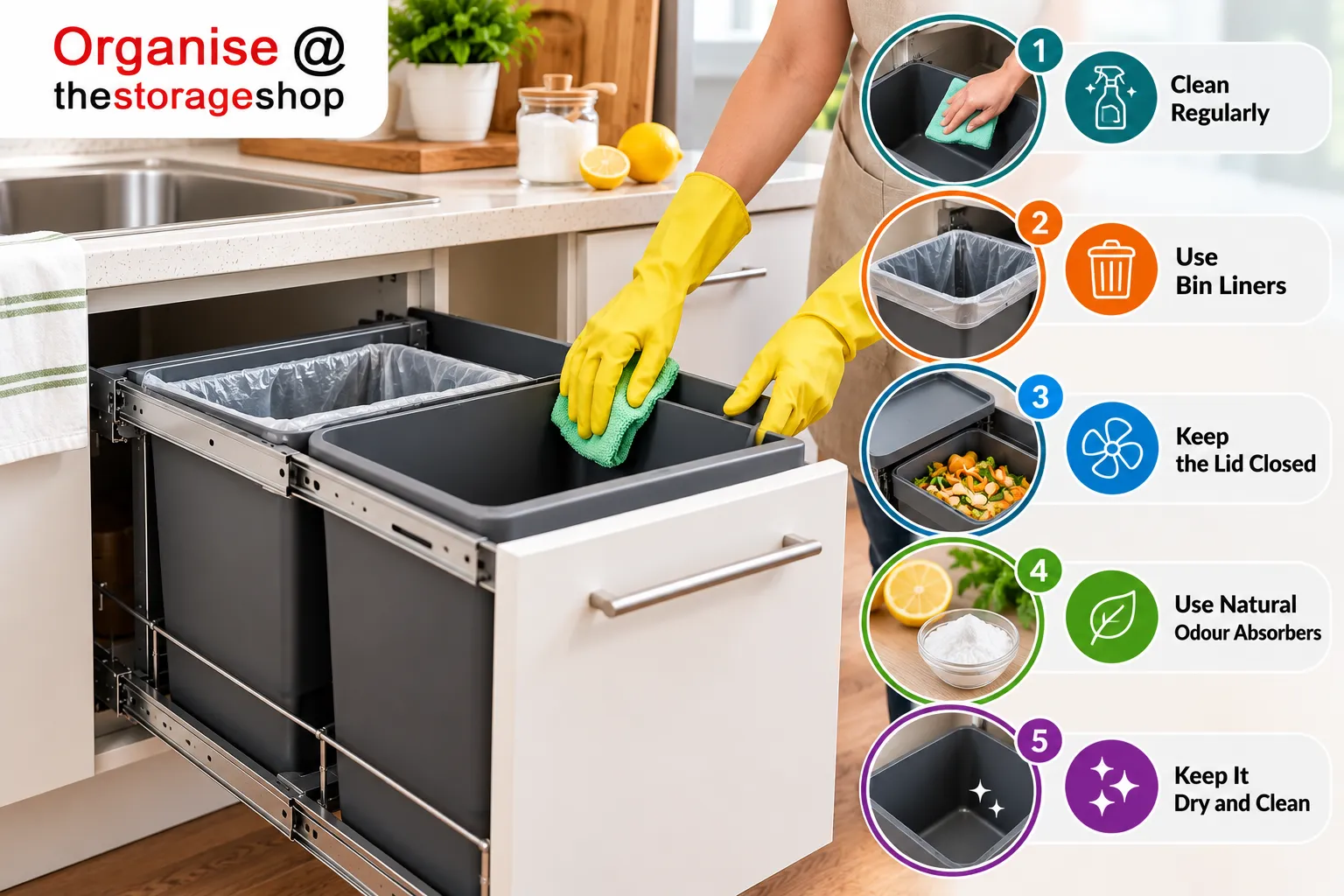
Quick answer: Empty food scraps every day or two, wash removable buckets weekly in warm soapy water, and let everything dry fully before you put a new liner in. With an in cupboard rubbish bin or under sink rubbish bins, clean the cupboard floor and frame as well, because hidden spills and damp cause most lingering smells.
Most bin smells don’t come from the rubbish you can see. They come from the dribble that leaked through a split liner three days ago and is now sitting under the bucket.
Why do kitchen bins smell?
Food starts breaking down the moment it hits the bin, and warmth and moisture speed that up. That’s why a bin that’s fine in July can be unbearable by the second day of a January heatwave. Add a leaky liner, a yoghurt tub that wasn’t rinsed or a damp cupboard floor, and the smell has somewhere to live long after the rubbish has gone.
Air freshener only covers the problem. Finding and removing the source is the only fix that lasts.
A 10-minute weekly clean
-
Take out the liner and tip any loose rubbish from the bottom of the bucket.
-
Lift the buckets out of the frame. Cleaning them in the cupboard means missing the corners.
-
Scrub with warm water, a squirt of dishwashing liquid and a soft brush. Focus on the rim, handles and the underside of any lid.
-
Rinse in the laundry tub or outside with the hose.
-
Let the buckets dry completely, outdoors if you can, before relining them.
That last step matters more than people think. A bucket put back wet keeps a film of moisture under the new liner, which is exactly where musty smells start.
Don’t forget the cupboard
An in cupboard rubbish bin hides the mess, but it also hides spills. With the buckets out, wipe the cupboard floor, the frame and the inside of the door. Use a damp cloth rather than a wet one, because the particleboard in most cupboards swells if water sits on it. Leave the door open for ten minutes so everything dries before the buckets go back.
Under sink rubbish bins need extra checks
The sink cupboard is shared with pipes, so a smell around under sink rubbish bins isn’t always the bin’s fault. Run your hand along the tap hoses and the waste pipe while the buckets are out. Damp patches, water stains or swollen board point to a slow leak. A drain-like smell usually means a loose waste connection or a failed seal, which is a job for a plumber, not a scrubbing brush.
Looking after pull-out runners
Crumbs and sticky drips collect on the runners and make the bin drag. Every month or so, remove the buckets, brush the runners with a dry paintbrush and wipe them with a barely damp cloth. Check the mounting screws while you’re there. Skip cooking oil and spray lubricants, which attract grime; use only what the manufacturer recommends.
A simple cleaning schedule
|
How often |
What to do |
|
Every day or two |
Empty food scraps, more often in summer |
|
Weekly |
Wash and dry the buckets, wipe the lid and rim |
|
Monthly |
Clean the cupboard floor, brush the runners, check screws |
|
After any leak |
Clean, dry and find the source before relining |
Choosing kitchen rubbish bins that are easy to clean
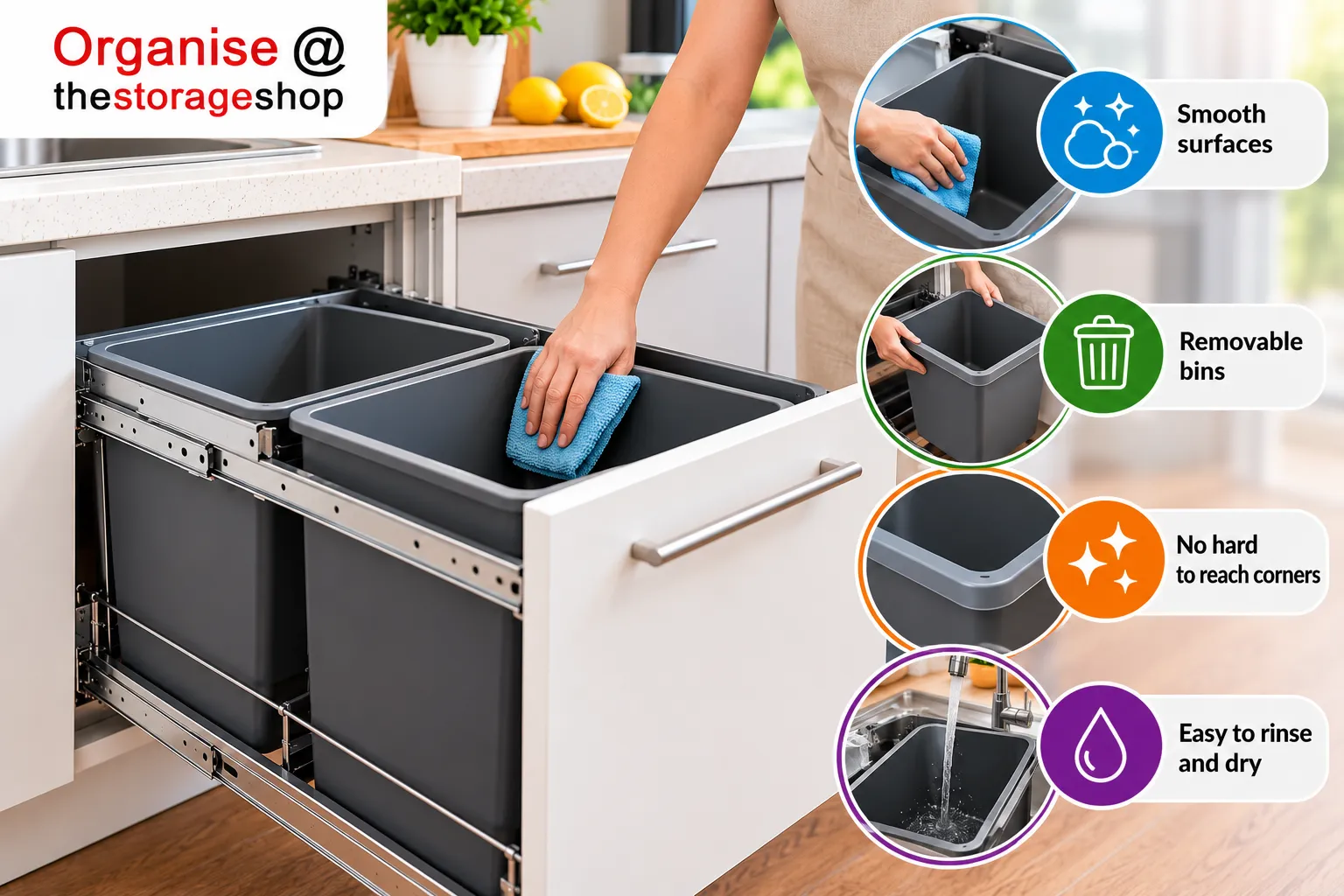
Kitchen rubbish bins with lift-out buckets, smooth inside corners and lids that come off are far easier to keep fresh. It also helps to buy from a range that stocks spare parts. The Storage Shop sells replacement buckets and lids for many of its bins, so a cracked or stained bucket can be swapped instead of the whole unit.
Frequently asked questions
How often should kitchen rubbish bins be cleaned?
Wash kitchen rubbish bins once a week and empty food scraps every day or two. In hot weather, or if you cook with a lot of meat and seafood, rinse the food waste bucket every few days. Wipe up spills straight away so they don’t dry onto the plastic.
How do you keep an in-cupboard rubbish bin from smelling?
Bag wet food scraps tightly and take them out often. Wash the buckets weekly and dry them fully before relining. Then clean what you can’t see: the cupboard floor, the frame and the inside of the door, where most hidden spills end up.
Can baking soda help with kitchen bin odours?
Yes, baking soda absorbs mild odours. Sprinkle a thin layer in the bottom of a clean, dry bucket before fitting the liner, and replace it each time you wash the bin. It won’t fix a dirty bucket or a leak, so clean first.
How do you clean a pull-out rubbish bin without damaging the runners?
Take the buckets out and wash them away from the cupboard. Brush crumbs off the runners with a dry brush and wipe them with a barely damp cloth. Don’t spray water or cleaner straight onto the runners, and avoid cooking oil, which collects dirt.
What is the best thing to clean a smelly bin with?
Warm water and dishwashing liquid remove most residue. For a bin that still smells, follow up with a household disinfectant used as the label directs, or a vinegar rinse to cut odours. Never mix bleach with vinegar or ammonia, as the combination releases toxic gas.
How do you get rid of maggots in a kitchen bin?
Empty the bin, then wash the bucket with hot soapy water and dry it fully. Flies lay eggs on exposed food scraps, which can hatch within a day in hot weather. To prevent a repeat, wrap meat and seafood scraps tightly, or freeze them until bin night.
Why does my under-sink cupboard smell when the bin is clean?
If the bin is clean but the cupboard still smells, the cause is usually damp or plumbing. Check for water marks or swollen board around the pipes, and sniff near the waste connection. A drain smell suggests a loose fitting or worn seal that a plumber should fix.
The bottom line
Clean bins come down to three habits: empty food scraps often, wash and fully dry the buckets each week, and check the cupboard as well as the bin. Do those, and the only time you’ll notice your bin is when you’re using it.