


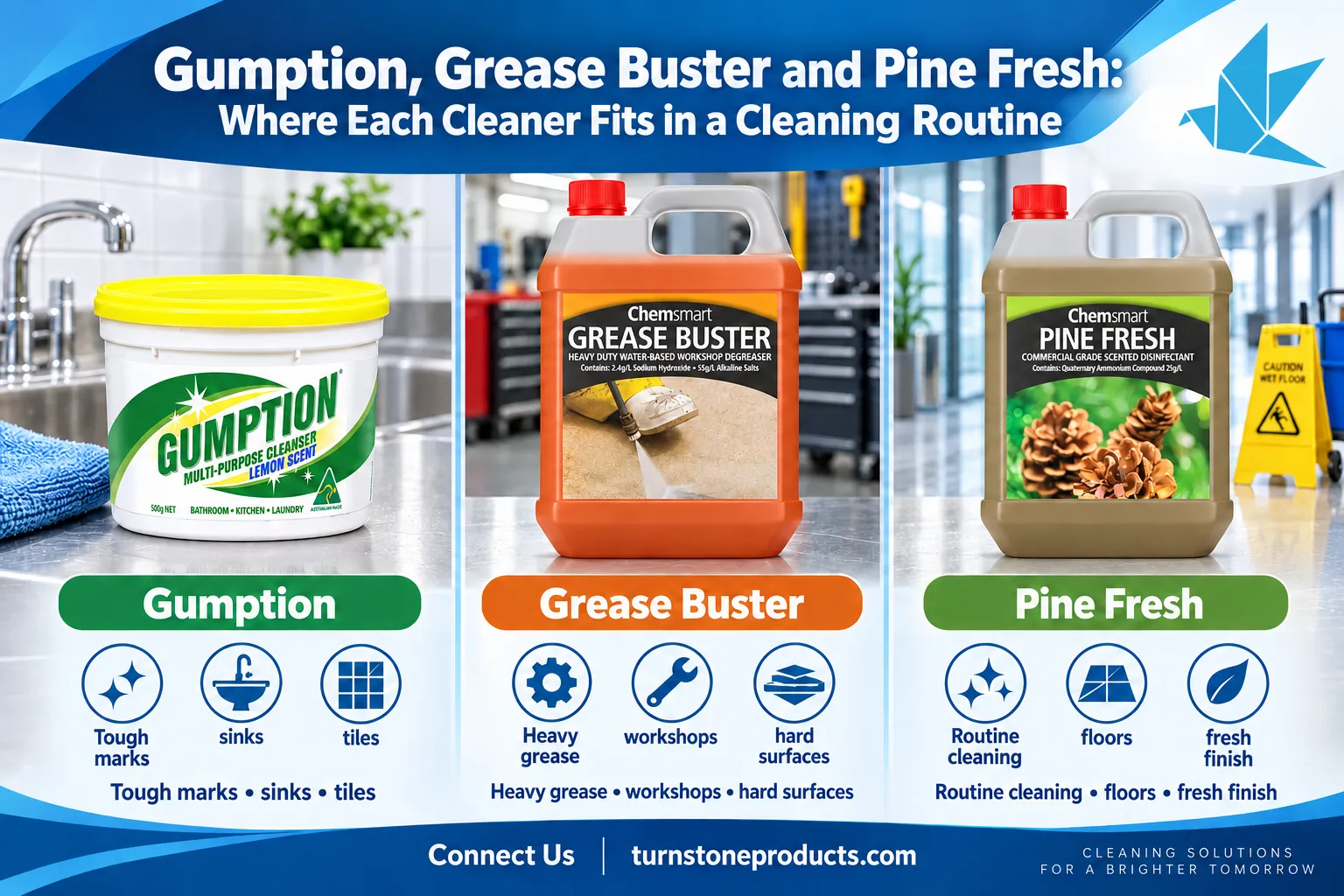
A cleaning cupboard can quickly become crowded with products that each appear to do a similar job. In reality, different cleaners are designed for different tasks, surfaces and types of soil. Using the right product for the job can make routine cleaning more organised and reduce the temptation to use one chemical everywhere.
Gumption, Grease Buster and Pine Fresh can each have a place within a cleaning routine, but the key is understanding where each type of product fits. Product directions should always be followed, particularly for dilution, surface compatibility and safe handling.
Match the Cleaner to the Problem
Cleaning becomes easier when the task is identified first. Ask what needs to be removed before reaching for a product.
Common problems include:
-
Greasy residue
-
General surface dirt
-
Marks and stubborn spots
-
Bathroom grime
-
Unpleasant odours
-
Dirt around high-use areas
This approach helps prevent the common mistake of using the strongest-looking product for every task.
Start With the Surface
A cleaner suitable for one surface may not be suitable for another. Always check the product information before use, especially on delicate, coated or unfamiliar materials.
The cleaning routine should protect the surface as well as remove the dirt.
Where Gumption Cleaner Fits
gumption cleaner is commonly associated with tackling stubborn marks and cleaning jobs that need more targeted attention.
The important point is to use such a product for an appropriate task rather than applying it automatically across an entire room. Small problem areas may require more focused treatment than ordinary daily cleaning.
For a workplace cleaning routine, this type of product can be kept for jobs where standard wiping does not achieve the desired result.
Handling Greasy Areas With Grease Buster
Grease creates a different cleaning challenge. It can cling to surfaces and leave a film that ordinary wiping may not remove effectively.
grease buster is therefore better considered as part of a routine for areas where grease and oily residue are the main concern.
This may be relevant in environments where food preparation or frequent handling creates greasy build-up.
Give the Product Time to Work
A useful cleaning habit is to follow the directions provided with the product instead of immediately scrubbing harder. Where the instructions specify an application method or contact time, follow them carefully.
Using a suitable technique can make the cleaning process more controlled.
Where Pine Fresh Comes Into the Routine
pine fresh can be considered when the cleaning routine includes products associated with freshening and general cleaning tasks.
Rather than treating it as a replacement for every specialised cleaner, consider where it fits within the sequence of routine cleaning.
The exact application should depend on the product instructions and the surface being cleaned.
Build a Task-Based Cleaning Routine
Instead of arranging products by brand or bottle size, organise the cleaning cupboard around tasks.
For example:
Routine cleaning: Use products intended for everyday surfaces and general maintenance.
Grease removal: Keep an appropriate degreasing product available for oily or greasy areas.
Stubborn marks: Reserve targeted cleaning products for spots that need additional attention.
Freshening: Use suitable products where odour management or a fresh-clean finish is part of the routine.
This approach makes it easier for staff to understand why different products are available.
Avoid Mixing Cleaning Chemicals
Different cleaning chemicals should not be mixed unless the product instructions specifically say that doing so is appropriate. Combining products can create unexpected chemical reactions or produce harmful vapours.
Staff should follow label directions and workplace safety procedures.
Store Products Carefully
A good cleaning routine also includes sensible storage. Keep products in appropriate locations, maintain clear labels and follow the storage instructions supplied with each product.
Do not transfer chemicals into unlabelled containers. If a product is decanted as part of an established workplace procedure, the container should remain properly identified according to applicable requirements.
Create a Simple Product Guide for Staff
If several cleaners are used by different employees, a short internal guide can reduce confusion.
The guide can explain:
-
Which product is intended for greasy areas
-
Which product is reserved for stubborn marks
-
Which cleaner is used for routine applications
-
Which surfaces require additional caution
-
Where staff can find product instructions
This does not replace the manufacturer’s instructions. Instead, it gives employees a quick operational reference.
Why Choose Us
Turnstone Products provides cleaning chemical options for organisations that need to manage different cleaning tasks. A broader range allows customers to consider products according to the problem they need to address rather than relying on one general-purpose solution.
For facility managers, the practical advantage is being able to build a cleaning cupboard around actual tasks and consumption.
About Us
Turnstone Products supplies cleaning and facility products for commercial and organisational requirements. Its chemical range gives customers options for considering routine cleaning, targeted cleaning and other everyday maintenance needs.
A sensible product selection begins with understanding the cleaning task, checking compatibility and following the supplied directions.
Review Your Routine
Cleaning requirements can change as a facility grows or its activities change. A kitchen may produce more grease after operational changes, while a shared office may need greater attention to high-contact surfaces.
Review which products are actually being used and whether staff understand their intended applications. Remove unnecessary duplication where appropriate and keep frequently used items easy to identify.
Conclusion
Gumption, Grease Buster and Pine Fresh should not simply be viewed as interchangeable bottles in a cleaning cupboard. Each can serve a different role depending on the task, surface and cleaning requirement. By identifying the problem first, following product instructions and giving staff a clear routine, facilities can make their cleaning process more organised and purposeful.